- Amazon
- Flipkart
- Meesho
- Amazon Seller FlexNew
- Shipping Label GeneratorShipping LabelNew
- IndiaMart CRM
- Other tools
- Login

29-09-2026 · Quick Cropper
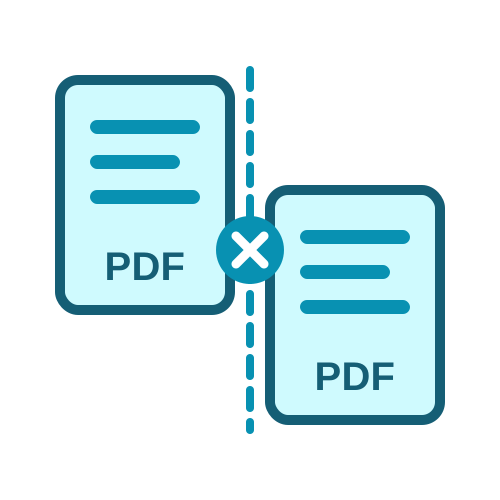
Splitting by page range is the most flexible way to cut a PDF into parts. You decide exactly where each part starts and ends, and each range becomes its own file. Here is how to split PDF by page range with this simple Quick Cropper guide, using the free Split PDF tool.
A page range is a group of pages written with a dash, such as 1-3 for pages one to three. You can list several ranges separated by commas, and mix them with single pages - for example 1-3, 5, 8-10. In the tool, each item in the list becomes a separate PDF, so the list 1-3, 5, 8-10 creates three files.
4-9 means pages 4 to 9.
12 means only page 12.
10- means page 10 to the last page.
-5 means pages 1 to 5.
Spaces do not matter, and you can also write 4 to 9. If a range goes backwards or past the last page, the tool shows a clear message, so mistakes are caught before you download.
Upload your PDF and wait for the page thumbnails to appear. The tool suggests splitting the file in half, which you can keep or replace. Type your own ranges in the box, and watch the thumbnails change colour - each colour is one output file. The list above the button shows every file and its pages. Click Split PDF and download to get a ZIP with all the parts.
Two quick buttons save typing. Split in half fills in two ranges covering the first and second half of the document. First page separately creates one file with the cover page and another with the rest, which is useful for cover letters and title pages. You can edit the ranges after clicking a shortcut.
Sometimes you want several ranges together rather than apart - for example pages 1-2 and 10-12 of a report as one short summary. Tick Save all ranges in one PDF, and the tool puts every range into a single file, in the order you typed. This is a quick way to build a shorter version of a long document.
Page ranges are perfect when a document has clear sections: chapters of a book, months in a statement, or couriers in a sorted label file. Write one range per section, and each section becomes its own file, ready to share or print.
Always glance at the coloured thumbnails before downloading. Make sure the first and last page of each part are correct, especially when ranges are close together. The pages are copied exactly, so the files keep their original quality and nothing needs fixing afterwards.
Use open ranges like 20- so you never miss the last pages. Keep a note of the ranges you use often, such as monthly statement pages. If you need to change the order of pages in a part, use ReArrange PDF afterwards, and to join parts again use Merge PDF.
With this simple guide, you can split PDF by page range in seconds: write your ranges, check the colours and download the ZIP. Quick Cropper's free PDF splitter keeps every page sharp and lets you split PDF pages exactly where you want.
Page ranges also work well for recurring tasks. If you receive the same kind of report every month, the sections usually start on the same pages, so you can reuse the same ranges each time. Keep them in a note, paste them into the tool and your files are ready in seconds. For documents where the sections change, the thumbnails make it quick to find the new page numbers. Either way, every range is copied exactly, so you get clean files that look just like the original, with no watermark added.
Last Updated: 23-09-2026